
Playbook · v0.8.0 Updated 2026-08-05
How any practitioner applies SRD. The methodology surface companion to the paper.
The SRD source paper specifies the diagnostic construct (what it is). The Playbook specifies the engagement protocol (how it runs). It is scoped deliberately to SRD application: open, cite-able, applicable by any practitioner, independent of any single consulting practice.

The application companion to the paper.
The Playbook is the methodology surface companion to the SRD source paper. The paper specifies the construct, the operationalisation, the lineage, and the falsifiability standard; the Playbook specifies how a practitioner applies the diagnostic in their own context, from signal selection through consequentiality follow-up.
It is written for the practitioner running the engagement: independent consultant, internal architect, transformation advisor, academic researcher. The structure is application-shaped: five-phase engagement protocol, six diagnostic disciplines, the anti-overreliance triad, application patterns, an open research agenda.
Cite what is derived; claim only what was produced. The Playbook applies the same discipline to itself.
Six parts. Application-shaped, not framework-shaped.
-
Part A: Foundations
The SRD construct as built (six-stock stack, diagnostic matrix, EE theoretical grounding). The Enterprise Engineering theory set (PSI · ALPHA · TAO · OMEGA · DEMO) cited to Dietz & Mulder 2024 as load-bearing source; the engineering implementation in EssentialModelKit named as the Soaring Wings contribution. Read Part A →
-
Part B: The Engagement Protocol
The five-phase application protocol (signal selection · delay diagnosis · bottleneck finding · intervention design · consequentiality review) with decision criteria, common pitfalls, and handoff specifications for each phase. Read Part B →
-
Part C: Diagnostic Disciplines
The methodological disciplines that distinguish a real SRD diagnostic from a structured opinion: anti-confirmation gate, inter-analyst reproducibility, threshold operationalisation, signal-identification protocols, within-engagement triangulation, consequentiality follow-up. Read Part C →
-
Part D: The Anti-Overreliance Triad
The AI-era discipline. Frontier-position awareness · disconfirming-signal authoring · anti-confirmation review. Anchored on Dell'Acqua et al. (2026) jagged-frontier finding. Read Part D →
-
Part E: Patterns of SRD Application
Engagement-typed patterns (instrumentation-rich, authority-lagged, strategy-visible, capability-map-complete) and quadrant-derived patterns (Augmented Frontier, Instrumentation Gap, Slow-Complex Zone). Cross-references the standalone Pattern Library.
-
Part F: Open Questions & Research Agenda
What's still unknown. System Dynamics now absorbed (v0.4, primary lineage); high-reliability organisations the next candidate. Cross-cultural validity, AI-era window-contraction parameters, sector specificity. Read Part F →
Six working surfaces. Free. No gate.
The Playbook is published in three layers. The open web spine (Parts A through F as readable pages on this surface), freely accessible. The six engagement canvases, the A3 working surfaces of the five-phase protocol, free to download below, CC BY-ND. And the bundle (canvases in all formats + the full Playbook PDF + release notes), sent by email on request.
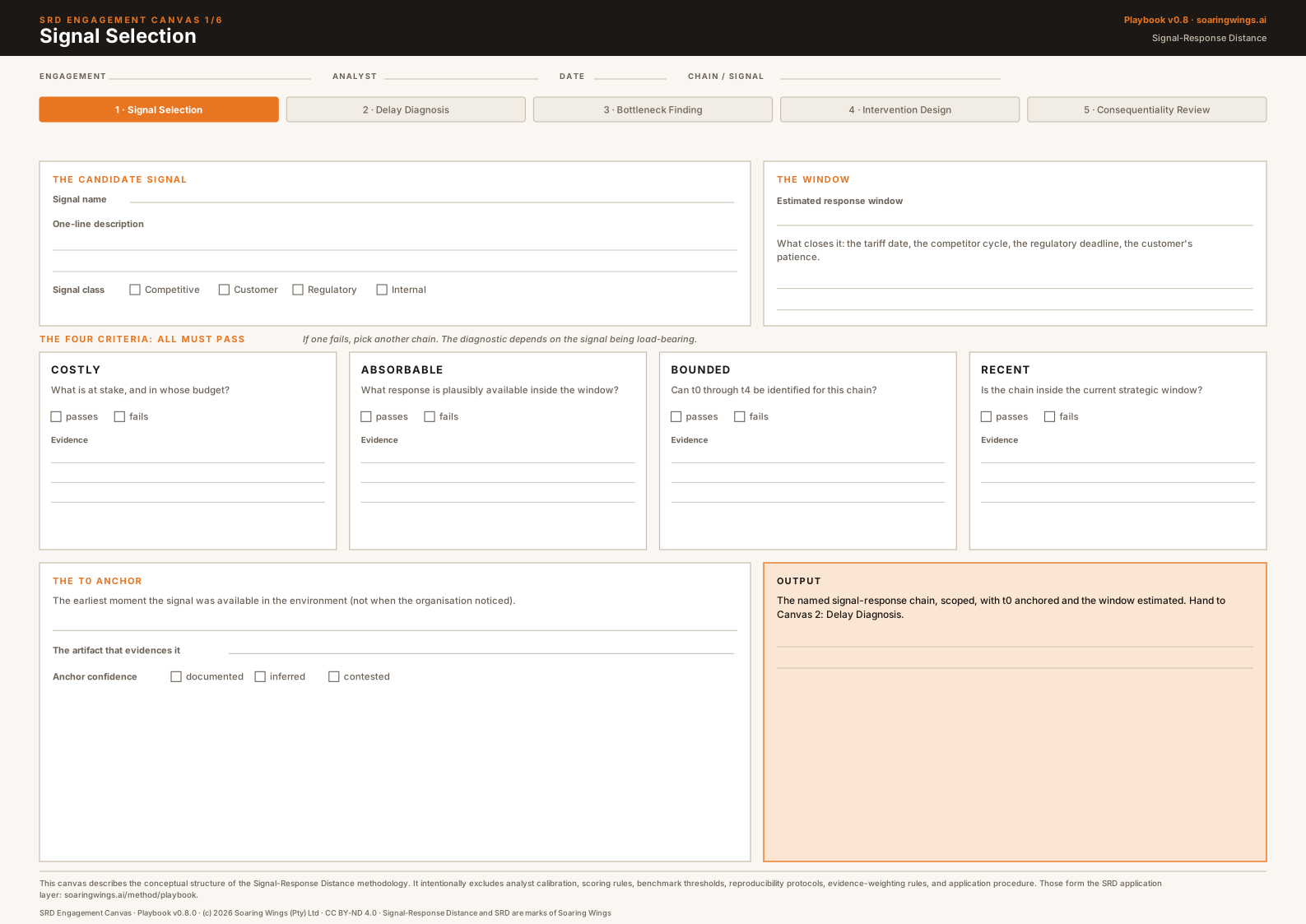 1 · Signal Selection
 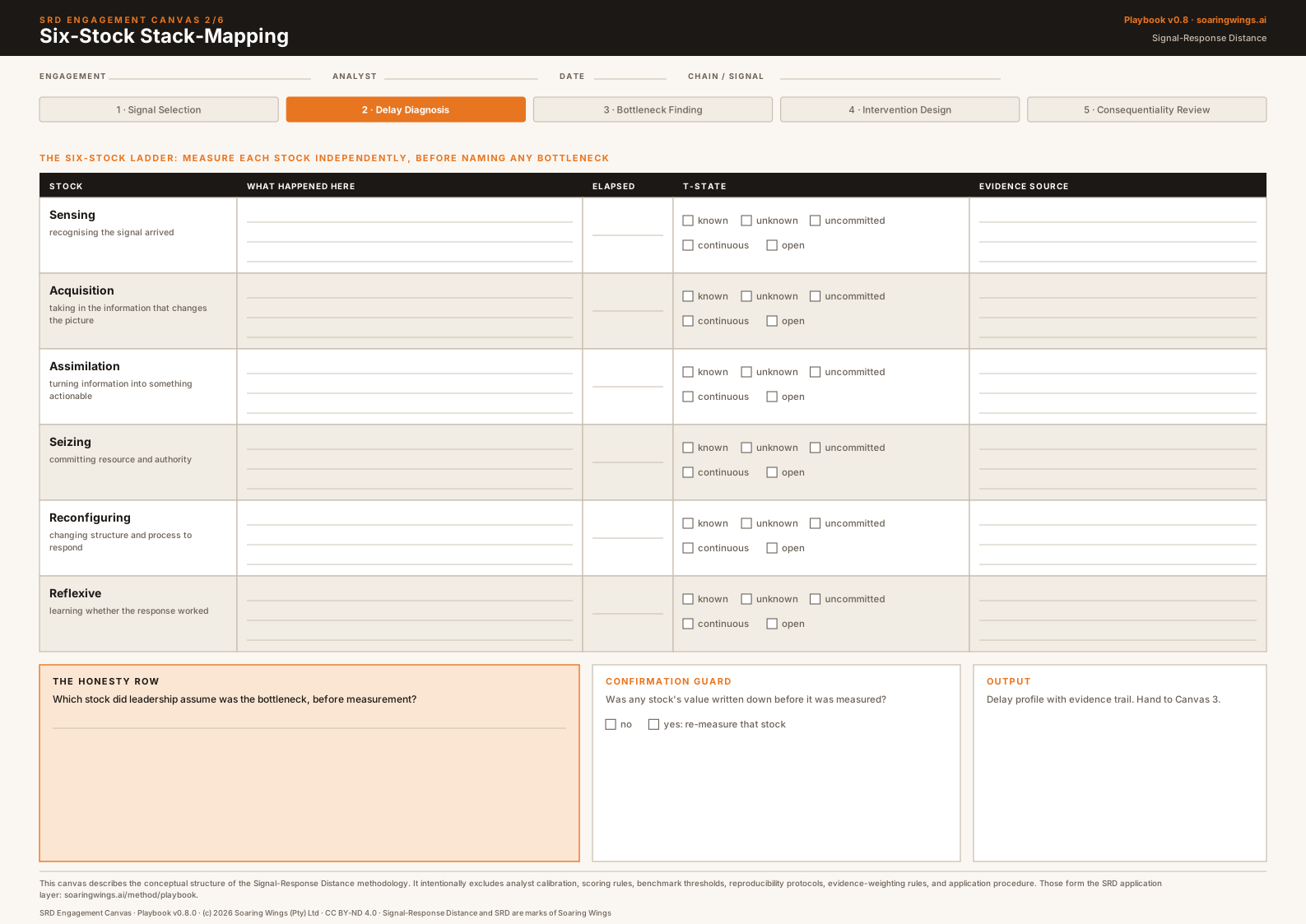 2 · Stack-Mapping
 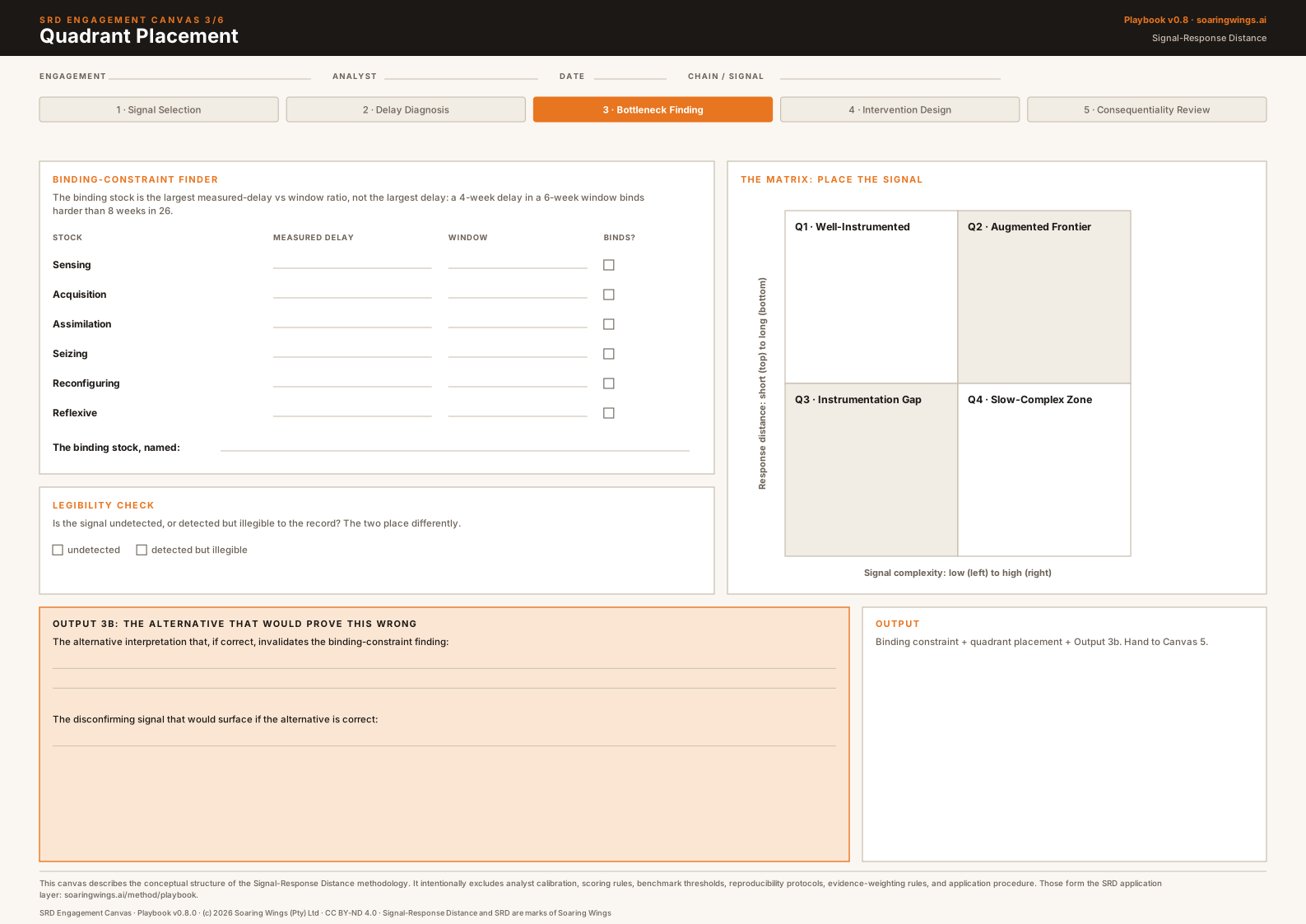 3 · Quadrant Placement
 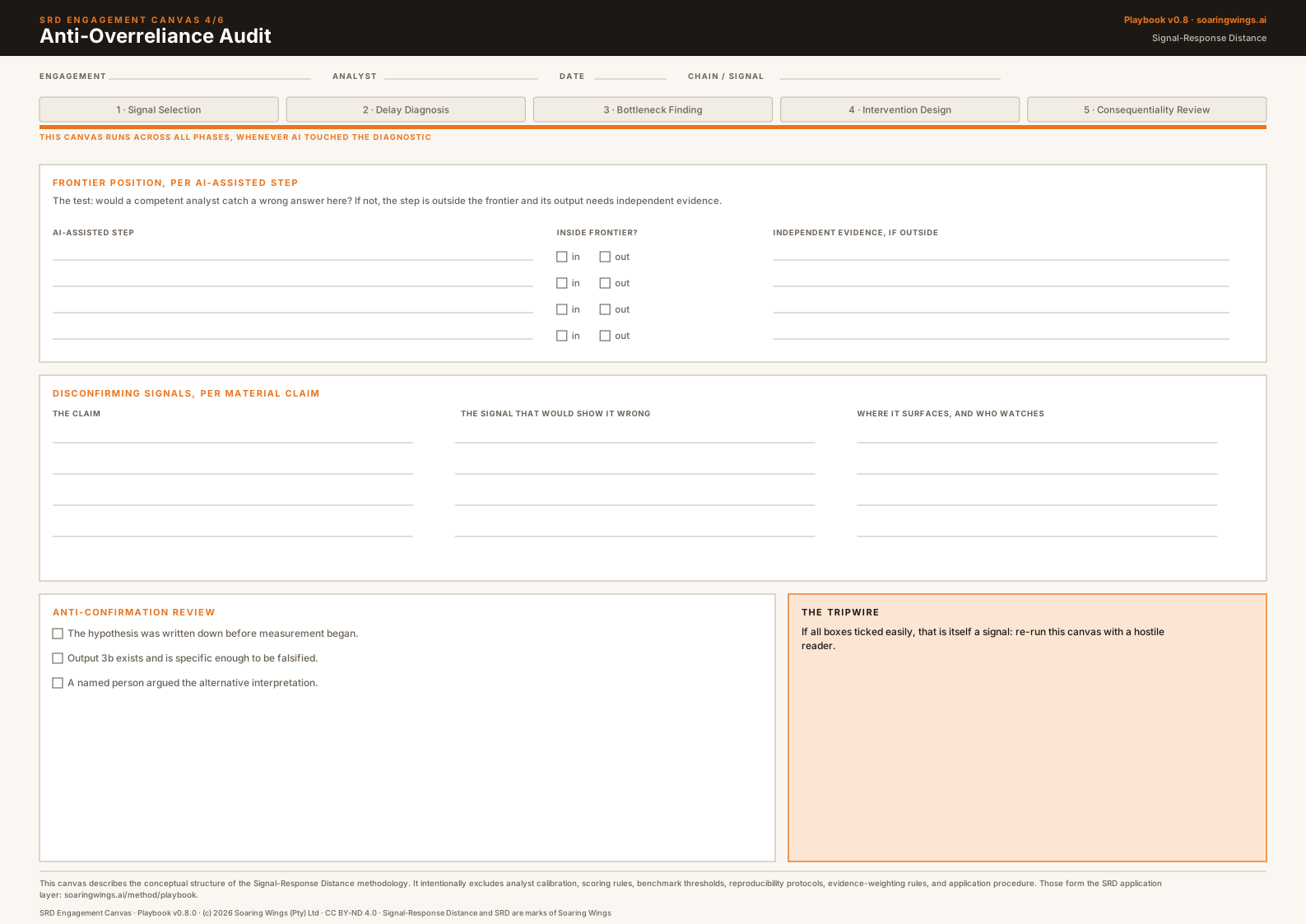 4 · Anti-Overreliance Audit
 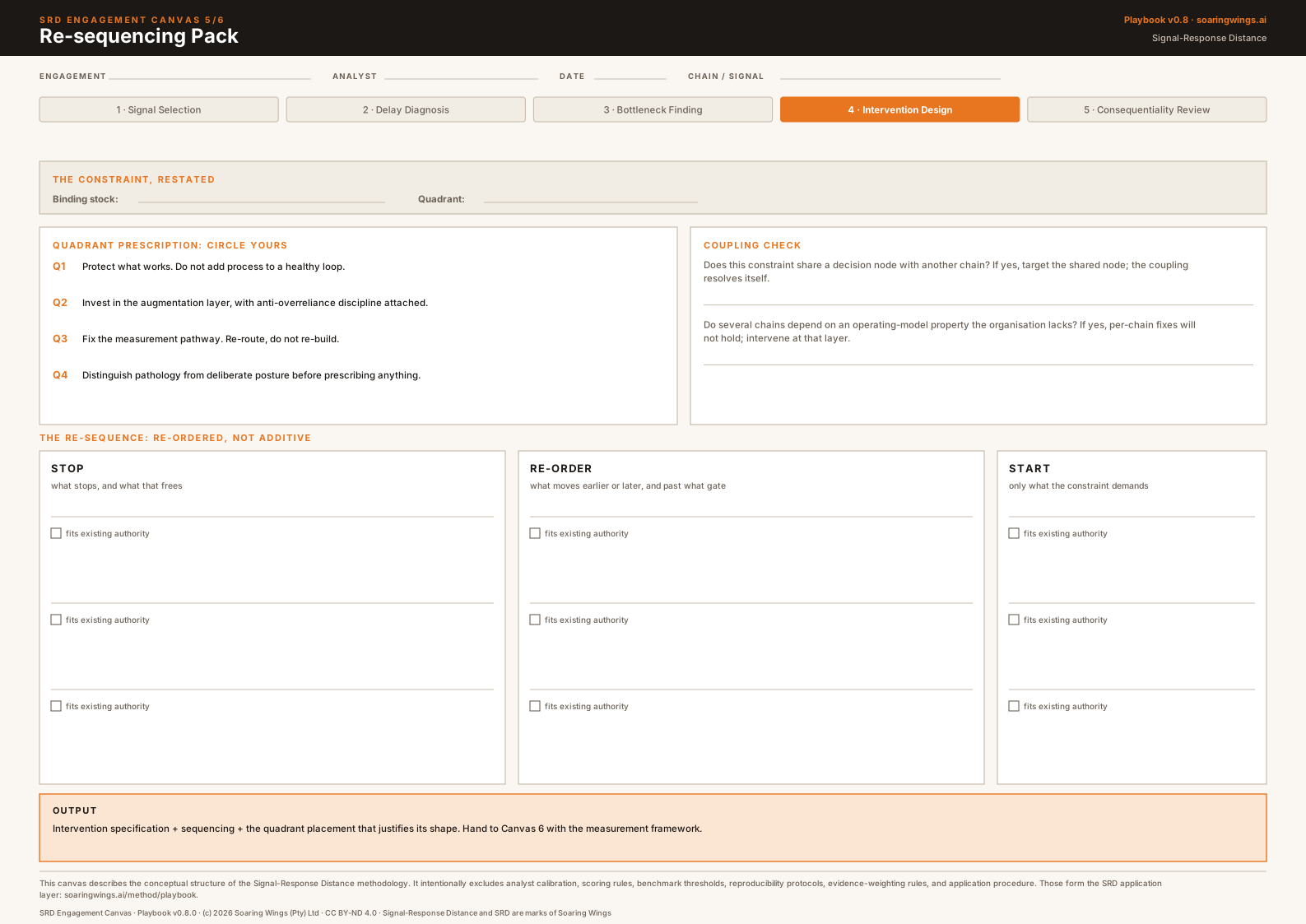 5 · Re-sequencing Pack
 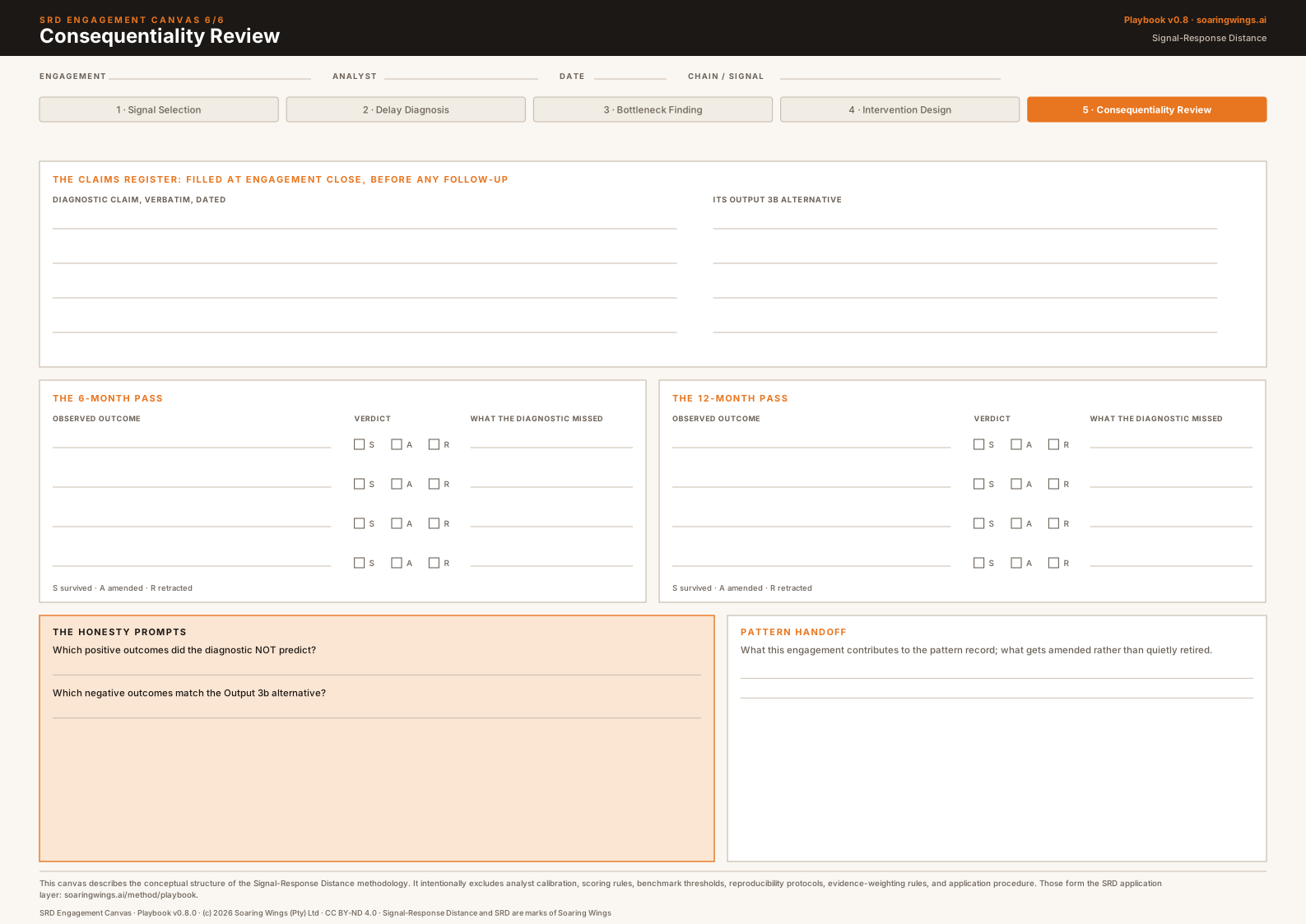 6 · Consequentiality Review
 Click a canvas for the print-ready A3 PDF. The release-pack model is borrowed from Boundaryless's Platform Design Toolkit: the working surfaces are the giveable substance; the bundle is email-tracked.
The v0.8.0 release page: SVG masters, the bundle, release notes →
Working document, not a manifesto.
v0.8.0 adds the six SRD Engagement Canvases and the Well-Instrumented (Q1) pattern. v0.7.0 was the inaugural release of the SRD Application Playbook; it superseded the prior Strategic Architecture Playbook v0.6.0, which has been retired from the methodology surface. The v0.6 content (engagement archetypes, modes, pricing structure, internal toolkit) was scoped to a single consulting practice and belongs to the practitioner front, not the methodology home. It now lives as engagement-only material.
v0.8.0 · 2026-08-05 (current): Engagement Canvases release. Six A3 working surfaces (CC BY-ND, free download), canvas references embedded per protocol phase, the Q1 Well-Instrumented pattern completing the quadrant set, and the public method boundary stated on every artifact.
v0.7.0 · 2026-06-09: inaugural release. Scope narrowed to SRD application. Cite-discipline applied throughout: Dietz & Mulder for the EE theory set, Olivier 2026 for the construct, Dell'Acqua 2026 for the anti-overreliance anchor.
v1.0 (forthcoming): cumulative empirical record of at least five completed applications with consequentiality follow-up.
The evidence standard.
Soaring Wings evidence discipline
Three tiers. Each one earns its place.
The Playbook distinguishes between working constructs (entering the methodology provisionally), field-tested patterns (validated across multiple applications), and stable methodology principles (three-or-more independent contexts confirmed). Each tier has a different status, citation form, and amendment threshold.
Constructs enter the Playbook provisionally: marked, dated, attributed to the engagement that surfaced them. Constructs that don't validate get retired.
Patterns graduate from construct to pattern when the same shape has surfaced in two or more unrelated applications with consequentiality follow-up confirming the diagnostic call.
Principles graduate from pattern to principle only after three or more unrelated applications have demonstrated the principle holds across sector, scale, and operating-model variation. Principles that fail this bar are edited, merged, or retired.
The Playbook is a working document, not a manifesto. Versions are dated. Amendments are visible. Disconfirmation is the load-bearing discipline.
Two doors.
Contact Soaring Wings
For research, peer review, methodology partnerships, release-pack access, critical readings, or pattern submissions.
contact@soaringwings.ai → Consulting applicationWork with AJ Olivier
For live SRD diagnostics, transformation architecture, advisory work, or commercial application of the methodology.
ajolivier.com →